
DYSTOPIA is an "SNS where no one gets hurt."
All posts on this SNS are subject to AI censorship using ChatGPT.
As a result, posts deemed inappropriate are automatically converted into appropriate text by the AI before being posted.
This means only appropriate posts appear in the timeline,
creating a system designed so that not only the direct victims of "online harassment" that frequently occurs on social media, but also the perpetrators and those who feel uncomfortable seeing harassing comments, will no longer exist.
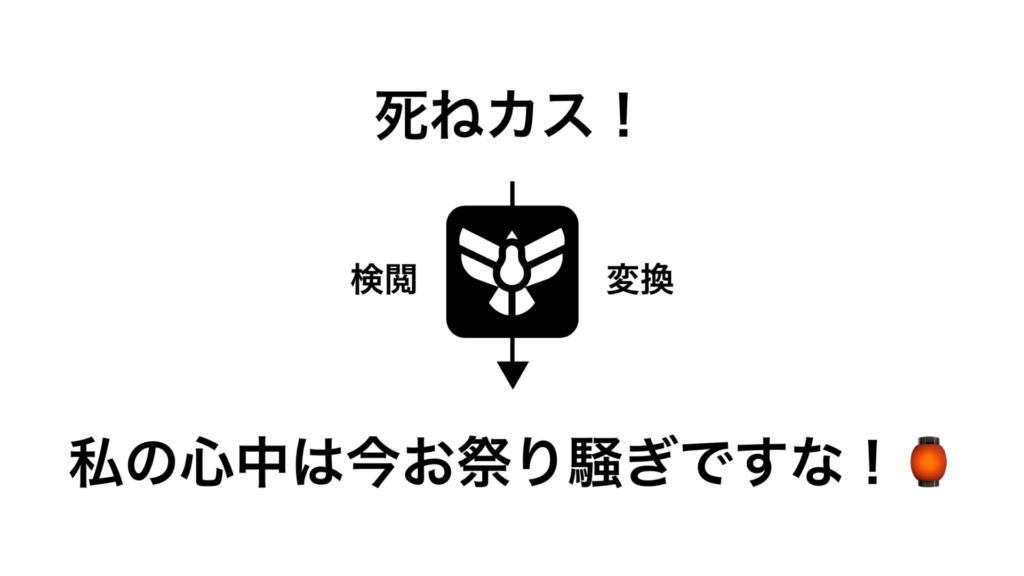
When I came up with the core concept of DYSTOPIA — "an SNS that converts inappropriate statements into appropriate ones" —
I immediately thought, "this is a dystopian world."
So I decided that if I was going to build it, I should properly construct the worldview, and while researching dystopian works,
I encountered George Orwell's "1984."
The more I researched, the more I realized this was exactly the kind of world I had imagined,
and I paid full homage to it — for example, naming the mysterious figure that appears when a post is censored "BIG BROTHER."
On the technical side, the biggest challenge was around ChatGPT.
Rather than converting every statement, I needed to convert only those deemed inappropriate,
so I crafted a prompt for ChatGPT to judge the appropriateness of text.
As for what kind of expression would truly achieve "no one gets hurt,"
I refined the prompts as much as possible.
In the early days of the ChatGPT boom, I was experimenting with it extensively, and from the beginning
I was paying attention not to chatbot-style uses, but to how it could be used to convert text.
I had developed a service called Soudanbako — a consultation service that could be monetized —
which is a Q&A platform for influencers.
While working on additional features for it, I was thinking about how to handle harassing comments sent to influencers,
and arrived at the idea of "rephrasing harassment in a milder way."
I couldn't implement it in Soudanbako due to resource constraints,
but the engineer I co-developed with frequently built SNS apps,
and the concept of "rephrasing harassment mildly" × "SNS app" was born.
My name is Shogo Omori, and I serve as the representative of Soudanbako Inc., the company behind DYSTOPIA.
I was born on February 19, 1996, in Ehime Prefecture, Japan.
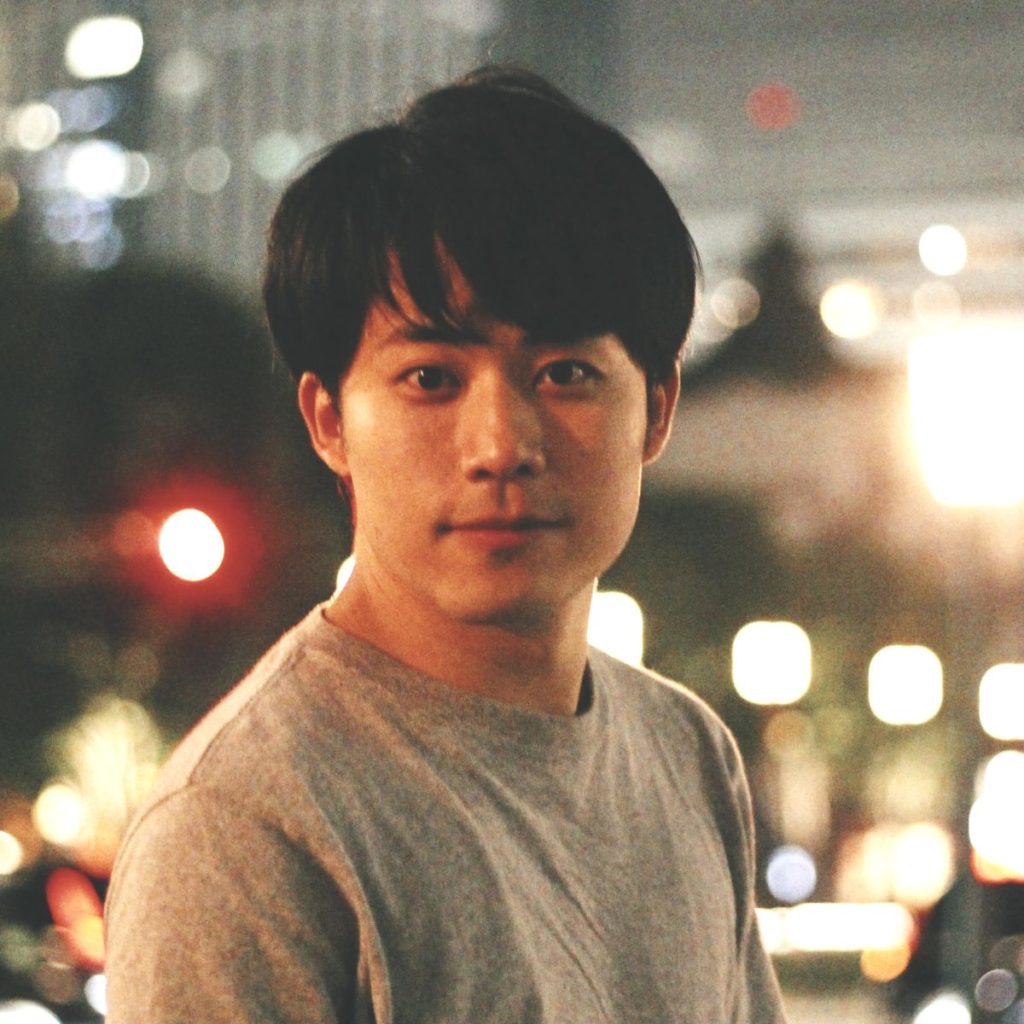
After graduating from an information science university, I enrolled in its graduate school.
However, I took a leave of absence to figure out my path in life — including the acting career I had been pursuing since my undergraduate days.
I learned web engineering and design so I could work from anywhere at any time.
When I saw a clear path to freelancing, I left graduate school and worked as a freelancer for about a year or two.
During that time, I watched content by Hiroyuki on YouTube Live — where he answers questions from viewers —
and thought, wouldn't it be interesting if more people could do this? That led me to start developing Soudanbako, a web service for monetizable Q&A.
After founding Soudanbako Inc. and launching Soudanbako, I arrived at the idea for DYSTOPIA and began development.
I strive to build services that help connect people by leveraging the rarity of being both a "technologist" and an "artist" — seemingly unrelated attributes.
I continue my acting career to this day, and I am seriously pursuing both business and acting side by side.
I especially want people who have experienced social media fatigue to use it.
I think DYSTOPIA is an SNS where stimulation and tranquility coexist,
so I hope people can enjoy communication in a world that's a little different from other social platforms.
I used to be someone who couldn't take action either,
but Soudanbako, the web service I built before this, changed that — lowering the barrier for me to act on things.
I'd always had the habit of jotting ideas down in a notepad,
but I'd never actually gotten to the point of "building" them, which was something of a complex for me.
However, when I came up with the idea for Soudanbako, I had a strong feeling that "if I push hard to finish this, the next time I have an idea, the hurdle to act on it will be lower."
Despite having negative feelings, I wrote up a proposal that same day and reached out to an acquaintance who might co-develop it with me.
I think people who can't take action are probably somewhere thinking "it probably won't succeed anyway."
What I would say, though, is that the experience of "having done it" has irreplaceable value in itself,
and whether it succeeds or not isn't really the point.
From the start of development to launch, the engineer I co-developed with and I never once met in person.
The one reason we were able to stay motivated was simply that this dystopian concept seemed interesting.
The co-developer is involved in corporate business improvement as an expert in app development and ChatGPT. I myself had experience in web service development, but app development was outside my expertise. So we were able to proceed smoothly by leveraging each other's strengths — the engineer's technical skills and my concept, design, and marketing.
Also, since we both had a similar sense of what was "interesting," we never had major disagreements about specs or concepts.
Yes, absolutely.
Is "no one gets hurt" even possible in the first place?
And is it even a good thing? — I'm approaching it from a skeptical angle.
In the past, there was enormous suppression and regulation of expression, and information was often manipulated for the convenience of large organizations like governments.
In a sense that might be "peace," but I personally find myself wondering — is that really okay?
On the other hand, "individual freedom" inevitably has the potential to harm someone else's "peace."
I think today's society is formed in the midst of that tension,
and in DYSTOPIA, the platform itself deliberately steers to one extreme, and with irony declares "This is peace!" — which I believe can protect the "peace" of the people within it.
First up would be my own: "My heart is now like a festival in full swing 🏮" — ha.
This is a line I crafted to genuinely convey intense feelings while including humor so the other person doesn't get hurt,
and I think I did a pretty good job with it.
Looking at the DYSTOPIA timeline, there are also voices saying that posting on DYSTOPIA should be called "dystopying,"
and every SNS has its own color — it's great when memes like this are born in abundance.
This might be wishful thinking, but by referencing the converted phrases from DYSTOPIA,
if everyone in their daily real-world communication started inserting a bit of humor to soften things when expressing their feelings,
the total amount of happiness in society as a whole would increase, and that would make me very happy.
First, that things like harassment where "someone gets hurt" are not okay.
Second, that humor is important in communication between people.
And third, I want to raise the question: does regulating expression really help anyone?
I think AI is one "means" toward exploring those questions.
Based on the current discourse around DYSTOPIA, it seems like the intent is getting through clearly.
No, because humans are inevitably involved in "tuning" the AI,
and I think that person's values are reflected in it to some degree.
However, by making the tuning process democratic, or having someone who is truly impartial (whether such a person exists is another matter) do the tuning,
I believe it can approach closer to "impartiality."
I think there are quite a few people who feel "scared" when they hear the word AI.
Dystopian sci-fi novels are exactly that.
However, by familiarizing ourselves with AI on a regular basis so we don't become "people manipulated by AI,"
I believe we can avoid such a future by building up immunity for the day that may one day come.
Ultimately, there are "people" who manage AI too,
so I think we need to raise overall literacy so we don't misuse it as a tool.
DYSTOPIA's current timeline is quite chaotic,
but in the future I'd like AI censorship to become more natural, gently accompanying people's SNS lives,
and truly aim to be "an SNS where no one gets hurt."
To achieve that, I want to better understand people's hearts and
pursue "no one gets hurt" through both principles and functionality.
DYSTOPIA is seeking support for ongoing service maintenance through FANBOX.
https://dystopia.fanbox.cc/
Soudanbako Inc. develops and operates a web service called "Soudanbako" — a "monetizable Q&A service." While it was previously limited to users with over 10,000 Twitter followers, it has now been reborn as an open service that anyone can use.
Our service allows influencers, cultural figures, singers, actors, and many others to generate revenue through fan communication, via "Super Letter" (tip-based post highlighting) and "THANKS" (tip-based thank-you for answers). We are currently looking for companies interested in advertising on Soudanbako, a web service with a monthly PV of up to 460,000.